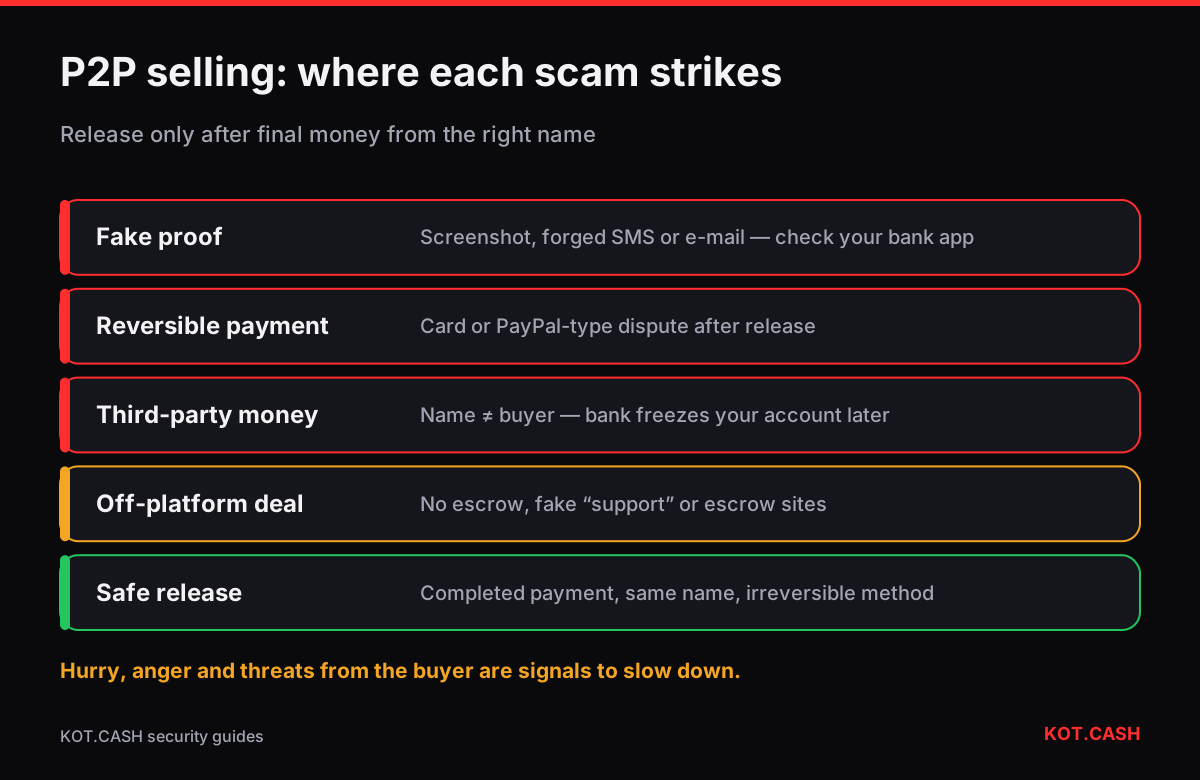
Most P2P crypto scams target the seller and share one goal: make you release the crypto before real, final money has reached your account. The buyer shows a fake payment screenshot, pays with a method they can reverse, pays from someone else’s account, or moves the deal off the platform where escrow cannot protect you. The rule that stops nearly all of them: release only after you see the payment in your own banking app, from an account in the buyer’s verified name, through a method that cannot be pulled back.
The main tricks
Each trick attacks a different step of the deal. Knowing which step it targets tells you what to check.
- Fake proof of payment. An edited screenshot, a forged bank e-mail or SMS, or a “pending” transfer that never completes. The buyer marks the order paid and pushes you to release.
- Reversible payment. Payment by card, PayPal or a similar service that the buyer later disputes as unauthorised or “item not received”. The crypto is gone, the fiat is pulled back.
- Third-party money (triangulation). The money comes from another person — often a victim of a different scam who believes they are paying for something else. When that victim complains, the bank freezes your account and you may have to return the money.
- Off-platform escrow. The buyer suggests finishing in Telegram “to save fees” or sends a link to a fake escrow site or fake platform support.
- Overpayment. They “accidentally” send more and ask you to return the difference — before the original payment is final.
Rules for sellers
- Check the payment in your banking app or bank website, never in a screenshot, e-mail or SMS. Wait until it shows as completed, not pending.
- Match the sender name with the buyer’s verified name on the platform. A different name means third-party money: do not release, cancel and refund according to platform rules.
- Accept only payment methods that are hard to reverse for that platform and country; avoid card, PayPal-type and “friends and family” payments from strangers.
- Keep all communication and the deal inside the platform. Platform support never contacts you in private messengers to “confirm” a payment.
- Do not return “overpayments” yourself — ask the platform to cancel and redo the order.
- Keep records: order ID, chat, bank statement entries. They matter if a bank or police later asks about the payment.
Rules for buyers
- Pay only from an account in your own name, the same name as your platform verification.
- Do not write crypto-related words in the payment reference unless the platform requires it; follow the platform’s instructions.
- Never pay outside the order flow or to details sent in a private message.
- If the seller does not release after you paid, open a dispute on the platform rather than paying again.
Choosing whom to trade with
Platforms show completion rate, number of trades and account age for each counterparty. They are useful but not proof: scammers buy aged accounts and inflate trade counts with small deals. Treat a high rating as a reason to proceed carefully, not as a reason to skip checks. New accounts with huge orders, offers well above the market price for your crypto, and buyers who immediately ask to move to a messenger are worth declining.
Why third-party money is the most dangerous
Fake screenshots are easy to catch if you check your bank. Third-party payments are not: the money really arrives. The danger comes days or weeks later, when the original payer — often a victim of a romance or investment scam — reports the fraud. Banks then block accounts that received the money; in many countries the receiver may be questioned as a possible “money mule”. In Russia banks block transfers and accounts under anti-money-laundering rules (115-FZ) and the Central Bank’s anti-fraud measures; the receiver must then explain the payment. That is why a name mismatch must always end the deal.
If you have already released crypto against a payment that turned out fake or reversed, open a dispute on the platform at once with the order ID and bank statement, and report the buyer’s account. Platforms can sometimes freeze the buyer’s remaining balance if you act before they withdraw.
Swaps without fiat
Crypto-to-crypto swaps avoid most of these risks because there is no bank transfer to fake or reverse. On KOT.CASH you send coins to the order’s deposit address and receive other coins to your address; the order page shows the status and the payout hash. If you need fiat, a P2P platform or a regulated exchange is still the route, and the rules above apply there. For your own records of crypto-to-crypto payments, the payment receipt generator creates a receipt with the transaction hash.
FAQ
The buyer sent a payment screenshot. Can I release?
No. Release only after the payment appears as completed in your own banking app.
The sender’s name differs from the buyer’s. What should I do?
Do not release. Cancel according to platform rules and return the money to the sender through the bank.
Why are card and PayPal payments risky for P2P sellers?
They can be disputed and reversed after you released the crypto.
Is it safe to finish a deal in Telegram to save fees?
No. Outside the platform there is no escrow and no dispute process.
What is a money mule in P2P?
Someone whose account receives money from fraud victims. Sellers who accept third-party payments risk being treated as one.